
Malaysia boasts a vibrant sporting culture shaped by tradition, climate, and national pride. The country has produced Olympic medallists in badminton, hosts international Formula 1 races, and maintains deep-rooted passion for football across all states. This guide examines the most popular sports in Malaysia, detailing their competitive structures, cultural significance, and participation rates across diverse communities.
From traditional games like sepak takraw to modern motorsport events at Sepang International Circuit, Malaysia offers rich sporting diversity. The Ministry of Youth and Sports actively promotes grassroots programmes while elite athletes compete on global stages. Major platforms including DK88 casino (welcome package 1,288 MYR), 1xBet (588 MYR bonus with extensive sports catalogue), and WE88 (500 MYR offer) provide comprehensive coverage for fans aged 18+ who wish to engage responsibly with sports content.
Overview of Popular Sports in Malaysia
The sporting landscape in Malaysia reflects the nation’s cultural diversity and tropical environment. Badminton dominates as the national sport, with Malaysia ranking consistently among the top five nations globally. Football attracts the largest fan base, with the Malaysian Super League drawing crowds exceeding 40,000 for major fixtures. Traditional sports like sepak takraw maintain cultural relevance, while motorsports benefit from world-class infrastructure.
Participation rates vary by sport: badminton clubs operate in 87% of urban districts, football leagues run in all 13 states plus three federal territories, and field hockey programmes reach 320 secondary schools nationwide. Basketball courts appear in 64% of public parks, while cycling routes expanded by 180 kilometres between 2020 and 2024 across Klang Valley alone.
The National Sports Council coordinates development across disciplines, allocating approximately 450 million MYR annually to training facilities, athlete scholarships, and grassroots initiatives. Elite sports schools in Kuala Lumpur and Bukit Jalil nurture talent from age 13, producing athletes who compete in SEA Games, Asian Championships, and Olympic qualifiers.
Badminton and Its National Popularity
Badminton stands as Malaysia’s most successful Olympic sport, delivering five medals since 1992. Lee Chong Wei’s three Olympic silver medals (2008, 2012, 2016) elevated the sport to national obsession. The Badminton Association of Malaysia oversees 2,400 registered clubs and 180,000 active members. Courts operate in 92% of community centres, with hourly rates ranging from 10 to 35 MYR depending on facility quality.
Major tournaments include the Malaysia Open Super 1000, attracting 32 nations and prize money exceeding 1 million USD. Youth programmes start at age seven, with dedicated coaching available at 67 Akademi Badminton Negara centres nationwide.
Professional players train six days weekly, clocking 30-40 hours including physical conditioning, technical drills, and match simulation. The national men’s team ranks eighth globally (as of April 2024), while women’s doubles pairs hold three top-20 world rankings. Equipment costs remain accessible: quality rackets start at 120 MYR, with shuttlecocks priced 18-45 MYR per dozen.
Broadcasting rights for Malaysia Open reach 4.2 million households via Astro Sports and RTM channels. Online streaming platforms expanded coverage, with highlights generating 8.6 million views monthly.
Football and the Malaysian League
Football commands the largest spectator following in Malaysia, with 23 million citizens identifying as regular fans. The Malaysian Super League comprises 12 teams competing from February to October, averaging 8,500 attendees per match. Johor Darul Ta’zim dominates with nine consecutive titles (2014-2022), operating on an annual budget near 60 million MYR.
The Football Association of Malaysia governs 14 state associations plus affiliated leagues spanning Premier, M3, and M4 tiers. Youth development pathways begin at Mokhtar Dahari Academy and Harimau Muda programmes, identifying talent from age 12. Approximately 340,000 registered players participate in structured competitions.
International fixtures at Bukit Jalil National Stadium (capacity 87,411) sell out for regional qualifiers. Malaysia reached the AFC Asian Cup finals in 1976 and 1980, though recent World Cup qualifying campaigns stalled at second-round stages. The national team ranks 130-145 globally, focusing on regional competitiveness within ASEAN.
Broadcast deals with Astro and beIN Sports deliver live coverage to 5.1 million subscribers. Corporate sponsorships from Petronas, Maybank, and TM inject 180 million MYR annually into club operations.
Sepak Takraw as a Traditional Competitive Sport
Sepak takraw blends martial arts, volleyball, and football into a uniquely Southeast Asian discipline. Malaysia ranks second globally behind Thailand, winning 31 gold medals across six SEA Games editions. The sport requires three players per side to volley a rattan ball over a 1.52-metre net using feet, head, knees, and chest—hands remain prohibited.
The Sepak Takraw Association of Malaysia manages 840 registered teams and 6,200 competitive players. School programmes introduce the sport at primary level, with interschool tournaments engaging 1,400 institutions annually. Professional leagues operate in Kuala Lumpur, Penang, and Johor, offering prize pools up to 180,000 MYR for national championships.
Training facilities cluster around universities and sports complexes, charging 15-25 MYR per two-hour session. Equipment costs remain minimal: quality balls retail at 45-80 MYR, lasting 30-40 matches with proper care.
International competitions include the ISTAF World Cup and King’s Cup in Thailand, where Malaysian teams consistently place on podiums. The sport’s cultural roots trace to 15th-century Malacca Sultanate, evolving from informal courtyard games to standardised Olympic-recognised discipline.
Field Hockey in Malaysia
Field hockey peaked during Malaysia’s Olympic bronze in 1975, though competitive standards have declined since the 1990s. The Malaysian Hockey Confederation oversees 180 clubs and 14,000 registered players. The national men’s team ranks 12th in Asia, competing in regional qualifiers.
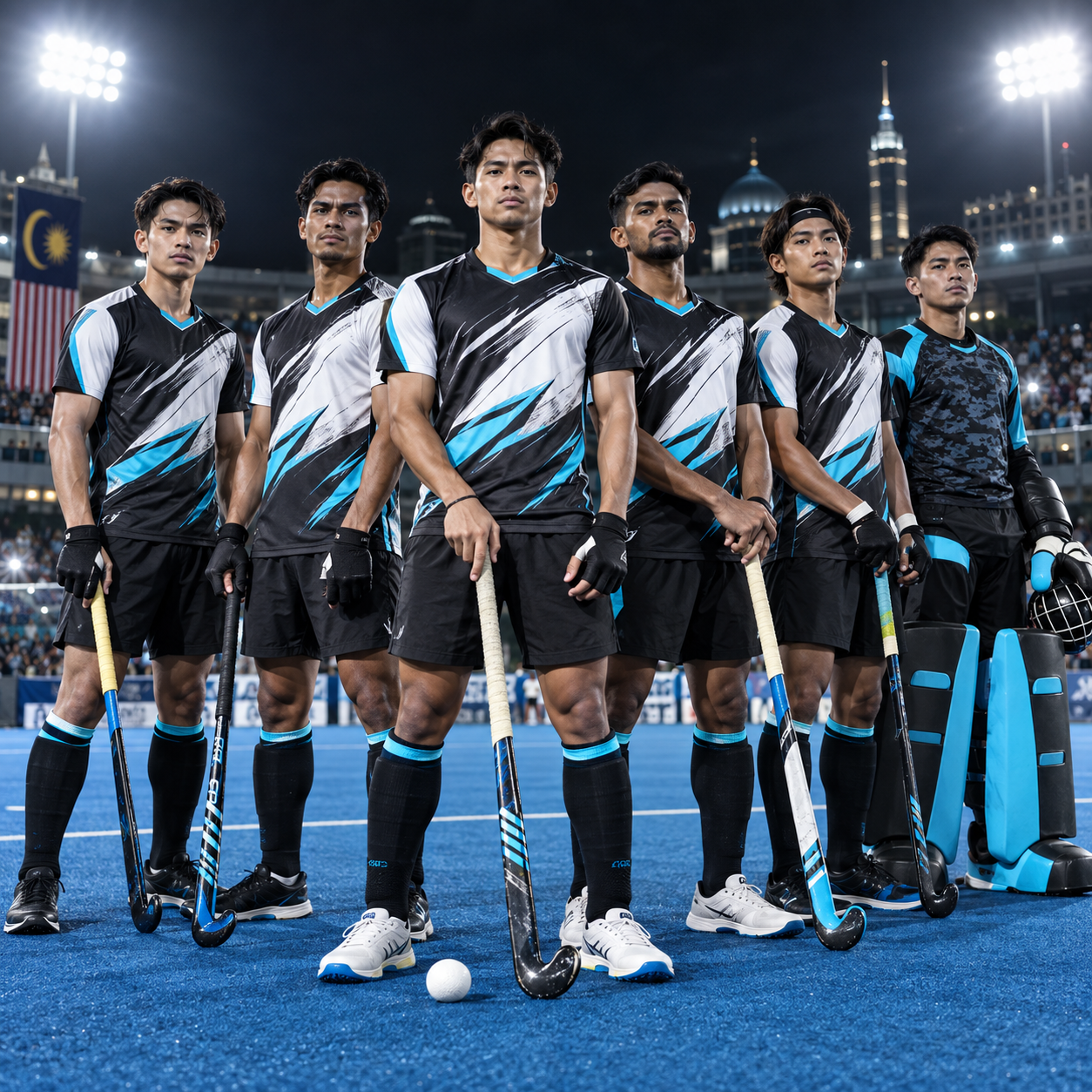
The Azlan Shah Cup, hosted annually in Ipoh since 1983, attracts six to eight international teams including Australia, India, and Pakistan. Prize money reaches 120,000 USD, with matches broadcast across RTM and online streaming platforms. Domestic leagues operate in three divisions, culminating in the Malaysia Hockey League championship featuring eight elite clubs.
Youth development programmes function through 95 secondary schools nationwide, though infrastructure gaps limit expansion. Astroturf pitches exist at only 42 locations, concentrated in Kuala Lumpur, Penang, and Kuching. Each pitch costs 1.8-2.4 million MYR to install and 180,000 MYR annually to maintain.
Women’s hockey maintains steadier growth, with the national team ranking 21st globally. Equipment investment starts at 850 MYR for stick, protective gear, and footwear.
Despite challenges, field hockey retains symbolic importance as one of Malaysia’s historic medal-producing sports.
Motorsports and Racing Events
Sepang International Circuit positions Malaysia as Southeast Asia’s motorsport hub. The venue hosted Formula 1 Malaysian Grand Prix from 1999 to 2017, attracting 90,000 spectators at peak years. Current events include MotoGP Malaysia (October), 8 Hours of Sepang endurance race, and Asian Le Mans Series rounds. MotoGP attendance averages 62,000 across three-day weekends, generating 140 million MYR in tourism revenue.
Domestic racing thrives through Malaysia Championship Series, Caterham Motorsport Challenge, and TCR Asia Series. Young drivers progress through karting at Batu Kawan and Shah Alam circuits before advancing to regional formula categories.
Drift culture gained popularity through local events at Batu Tiga and Serdang circuits, with competitions drawing 8,000 spectators. The Malaysian Automobile Association sanctions 42 motorsport events annually, from rally raids in Pahang rainforests to drag races at Sepang dragstrip.
Broadcasting partnerships with Fox Sports Asia and local networks deliver live coverage to 3.7 million households. Corporate sponsorships from Petronas, Shell, and Honda inject 220 million MYR into teams and events.
Basketball and Other Team Sports
Basketball enjoys urban popularity, with 6,800 courts distributed across public parks, schools, and private facilities. The Malaysia Pro League features 10 teams competing from March to November, averaging 1,200 spectators per game. NS Matrix holds five consecutive championships, operating with professional coaching staff and imported players.
Youth participation surged following NBA streaming availability. School tournaments engage 920 institutions, with state-level competitions identifying talent for national junior squads. The national men’s team ranks eighth in Southeast Asia.
Court rental fees range 40-80 MYR per two hours depending on location and facility quality. Equipment costs begin at 180 MYR for quality shoes and 65 MYR for regulation-size balls. Public courts operate free of charge in 78% of municipal parks, supporting accessibility.
Volleyball maintains steady participation through 340 registered clubs and university leagues. Beach volleyball facilities exist at Penang, Langkawi, and Desaru, hosting international FIVB events. Rugby union grows via 48 clubs nationwide, with the national sevens team competing in Asia Rugby Sevens Series. Netball dominates women’s school sports, engaging 1,600 teams in annual championships.
Running, Cycling, and Outdoor Activities
Running events attract mass participation, with Standard Chartered KL Marathon (42,000 entrants in 2023), Penang Bridge International Marathon (25,000 runners), and 120+ smaller races annually. Registration fees range 60-280 MYR depending on distance and event prestige. The Malaysian Athletics Federation sanctions competitions from 5K fun runs to ultra-marathons exceeding 100 kilometres.
Park runs operate free weekly sessions at 17 locations nationwide, logging 3,200 regular participants. Running clubs organise group training covering 18-35 kilometres weekly for marathon preparation. Equipment costs stay minimal—quality running shoes retail 280-480 MYR.
Cycling surged during pandemic lockdowns, with bicycle sales increasing 230% in 2020-2021. Le Tour de Langkawi attracts UCI WorldTour teams for eight-stage races across 1,200 kilometres, broadcast to 150 countries. Recreational cycling groups organise weekend rides spanning 40-80 kilometres through rural routes. Dedicated lanes expanded in Kuala Lumpur and Putrajaya, totalling 380 kilometres by 2024.
Mountain biking thrives at Kiara, Apek Hill, and Bukit Cahaya trails, with competitions sanctioned by Malaysian National Cycling Federation. Triathlons combine swimming, cycling, and running—Ironman Malaysia in Langkawi draws 2,100 athletes from 58 nations.
Major Sporting Events and Competitions
Malaysia hosts regional and international competitions across multiple disciplines. The SEA Games rotates among Southeast Asian nations every two years, with Malaysia hosting in 2001 and 2017. The 2017 edition featured 404 events across 38 sports, engaging 7,000 athletes. Malaysia ranked fourth with 145 gold medals, excelling in badminton, diving, and sepak takraw.
The Commonwealth Games includes Malaysian participation since 1950, yielding 56 gold medals historically. Squash, badminton, and diving produce consistent podium finishes. Nicol David’s eight World Championship titles (2005-2014) elevated squash prominence.
Annual fixtures include Malaysia Open badminton (April), Malaysia MotoGP (October), and AFF Championship football qualifiers. University games organised by MASUM engage 12,000 student-athletes across 18 sports, serving as talent pipelines for national squads.
Esports gained official recognition, with Malaysia hosting Mobile Legends Southeast Asia Cup and Dota 2 qualifiers. The Malaysian Esports Federation coordinates five competitive titles, registering 8,400 players in structured leagues.
The Role of Sports in Malaysian Culture
Sports serve as unifying force across Malaysia’s multi-ethnic society. Badminton heroes like Lee Chong Wei transcend racial boundaries, celebrated equally among Malay, Chinese, and Indian communities. National team victories trigger spontaneous street celebrations, uniting citizens regardless of background. Government initiatives promote “Sukan untuk Semua” (Sports for All), encouraging participation across age groups and income levels.
School curricula mandate two hours weekly physical education, introducing students to football, badminton, athletics, and traditional games. Inter-school competitions engage 1.2 million students annually, identifying talent while fostering teamwork and discipline.
Religious and cultural festivals incorporate sporting activities: Ramadan football tournaments operate nightly after tarawih prayers, Chinese New Year features lion dance competitions requiring athletic prowess, and Deepavali celebrations include kabaddi matches in Tamil communities.
Corporate Malaysia invests heavily in sports sponsorships—Petronas supports motorsports and football, Milo sponsors grassroots athletics, while regional banks fund stadium naming rights. Total private sector investment exceeds 520 million MYR annually, complementing government allocations. Media consumption patterns show 68% of Malaysians follow at least one sport regularly, with football and badminton commanding largest audiences.
FAQ
What are the most popular sports in Malaysia?
Badminton ranks as the national sport with 180,000 registered players, followed by football attracting 23 million fans nationwide. Sepak takraw holds cultural significance with 6,200 competitive athletes, while field hockey and motorsports maintain regional prominence. Basketball, running, and cycling show rapid participation growth in urban areas.
Which Malaysian athletes achieved Olympic success?
Lee Chong Wei earned three Olympic silver medals in badminton (2008, 2012, 2016). Pandelela Rinong secured bronze in diving at 2012 London and 2016 Rio Games. Cheong Jun Hoong partnered Pandelela for silver in synchronised 10m platform at Rio 2016. These five medals represent Malaysia’s complete Olympic podium history since independence.
How many people participate in sports regularly in Malaysia?
Approximately 8.4 million Malaysians engage in structured sports activities monthly, representing 26% of the population. Football accounts for 2.1 million participants, badminton 1.8 million, running 1.3 million, and cycling 940,000. School-based programmes add 1.2 million students through mandatory physical education.
What major sporting facilities exist in Malaysia?
Bukit Jalil Sports Complex houses the 87,411-capacity National Stadium, Axiata Arena (16,000 capacity), and National Aquatics Centre. Sepang International Circuit hosts MotoGP and motorsport events with 130,000 spectator capacity. Badminton centres operate in Kuching, Bukit Jalil, and Shah Alam with Olympic-standard courts. Each state capital maintains multi-purpose stadiums for football and athletics.
Are there opportunities for sports betting on popular sports in Malaysia?
Online platforms including DashKing88 (1,288 MYR welcome package), 1xBet (588 MYR bonus), and WE88 (500 MYR offer) provide coverage for football, badminton, basketball, and motorsports. These services operate under international licenses—PAGCOR, Isle of Man, Curaçao. Users must be 18+ and understand local regulations remain sensitive regarding online sports participation. Responsible engagement requires setting limits and treating activity as entertainment.
How does Malaysia perform in regional sporting competitions?
Malaysia consistently ranks fourth to sixth at SEA Games, winning 145 golds in 2017 edition. Badminton delivers guaranteed medals—Malaysia won nine golds at 2022 Hanoi Games. Diving produces reliable podium finishes with eight golds in 2017. At Asian Games, Malaysia averages 12-18 gold medals, concentrated in badminton, diving, and bowling.
What traditional sports remain popular in modern Malaysia?
Sepak takraw maintains strongest traditional presence with 840 registered teams and national school programmes. Silat martial arts engages 120,000 practitioners through 600 clubs, competing in SEA Games since 1987. Wau (kite flying) competitions occur during harvest festivals, particularly in Kelantan and Terengganu. Dragon boat racing thrives during water festivals, with 180 teams competing nationally.